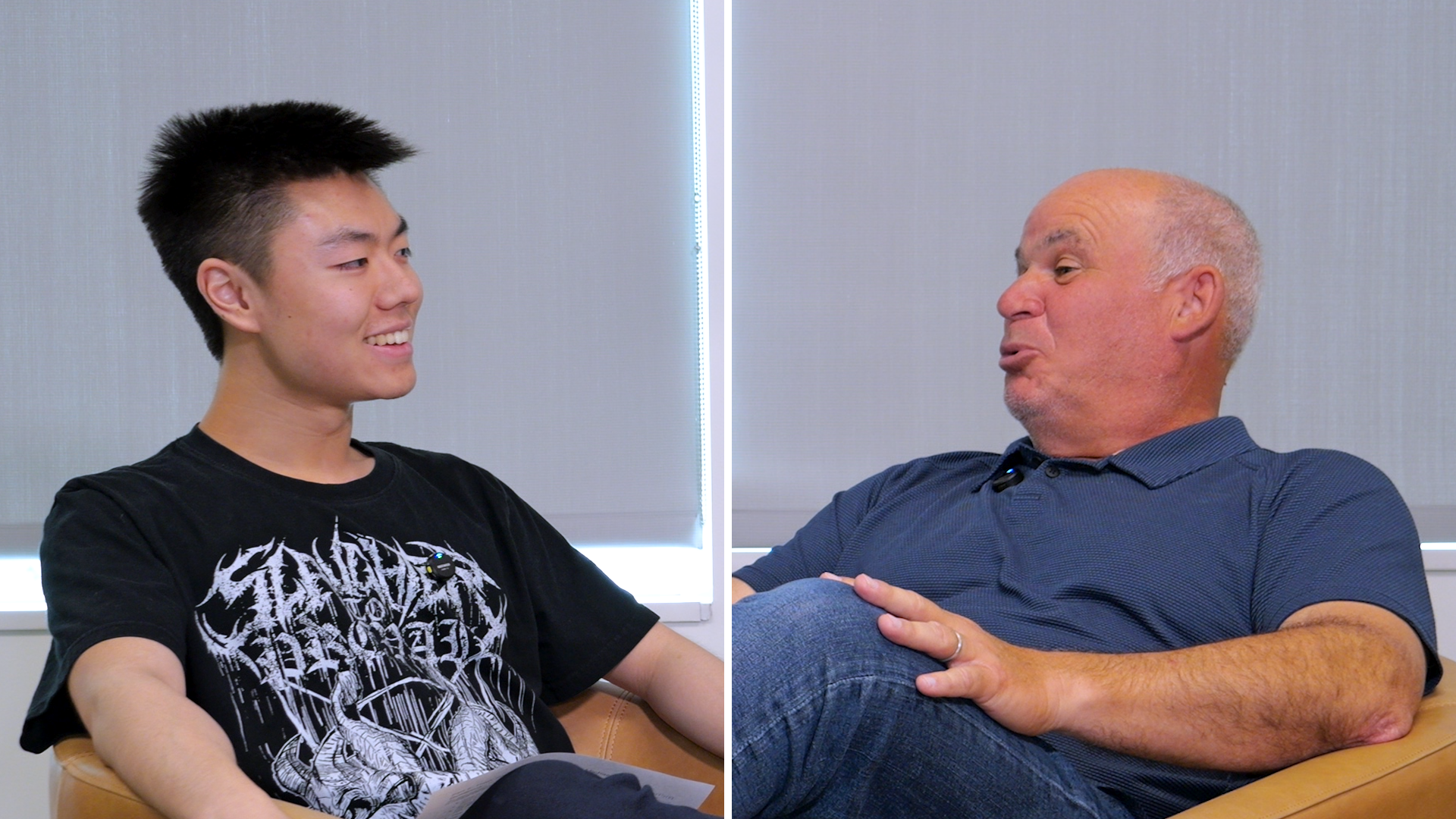
Richard Sperber built ValleyCrest into what's now BrightView, then started over and did it again with Sperber Landscaping. He sat down with our founder, Michael Ding, to talk people, patience, private equity, and why estimating is the best training ground in the business.
Few people in landscaping need less of an introduction than Richard Sperber. He grew his family's company, ValleyCrest, into the business that became BrightView—the largest landscaping company in the country. Then he formed Sperber Landscape Companies, becoming a roughly $500M operation before selling it to private equity. We hosted a fireside chat with the legend himself at Bobyard HQ for insights into what he’s learned along the way on his multiple rises to success.
Richard and Michael covered a lot of ground. You can watch the full conversation below, or read our favorite moments below.
Table of contents
-
How Richard Sperber scaled ValleyCrest to 13,000 employees without micromanaging
- Why ValleyCrest planned in three-year horizons, not quarters
- Landscaping won't grow like a tech startup, but estimating can
- Why Richard Sperber walked away from the BrightView merger
- Why estimating is the best training ground in landscaping
- What's next for Richard, and for Bobyard
- FAQs
How Richard Sperber scaled ValleyCrest to 13,000 employees without micromanaging
Michael asked Richard about the biggest unlock in scaling ValleyCrest from $200 million toward a billion, and he immediately spoke about investing in his people, and never micromanaging them.
"When you have 13,000 people showing up in the field every day, you certainly can't micromanage them. You've got to make them feel like it's their business, like they're entrepreneurial, like they're a part of it." — Richard Sperber
That conviction showed up as a relentless investment in development. "My business depends on surrounding myself with great people," he said. "We spent a lot of time and energy on training, training, training. Developing, developing, developing. Stay close to your people, give them the opportunity, and let them make mistakes."
It also meant being ruthless about who got in the door. As it turns out, both Richard and Michael run their companies on the same unwritten “no jerks” rule.
"The disruption one bad person can make is really amazing," Richard said. "The blast radius is pretty bad on a wrong hire," as Michael put it.
Why ValleyCrest planned in three-year horizons, not quarters
While AI-native companies like Bobyard have warpspeed timelines and planning cycles, Richard admits that one reason ValleyCrest could develop its people so deeply was precisely because they weren’t racing a clock. Richard credits a "patient dad who let me make all my mistakes," and a planning rhythm most growth-stage companies would find unthinkable.
"We didn't think about the business year by year. We thought about it every three years. That gave us a lot of opportunity to develop great people. You can't snap your finger and develop people. I think our long-term outlook on the way we ran our business was actually a competitive advantage for us." — Richard Sperber
Landscaping won't grow like a tech startup, but estimating can
Michael described the venture capital world's prior appetite for "triple-triple, double-double" growth, with the newer breed of AI “modelbusters” posting 10x growth, and how landscaping was due for a productivity surge after lagging behind the general U.S. economy for the past half century. Richard wasn't quite sure about 10x growth for the trades overall, but he made an exception for an area of landscaping that could hit those growth rates.
“One place the math can actually move is estimating capacity. You can only bid so much work, and it's very monotonous. But if you have three estimators with Bobyard, you can now bid twice the work, or triple the work." — Richard Sperber
Michael admitted that though a 50–70% reduction in takeoff time can roughly 3x an estimator's capacity, “there are other bottlenecks in your company, and a lot of them live outside the estimating department.” The bigger opportunity, he told Richard, is that the takeoff is just the front door:
"Takeoff is the start of a lot of different workflows. All your data for procurement, for phases, for execution? It all comes from the initial takeoff. There are a lot of really cool things we want to build in the future surrounding that ecosystem." — Michael Ding
Why Richard Sperber walked away from the BrightView merger
As ValleyCrest grew, the family brought in outside capital, but investors had a different exit in mind: merging the two family landscaping businesses that ultimately created BrightView. Richard saw it differently, and chose to leave.
But he’s not anti-private-equity, pointing out that a decade or so ago, there were one or two PE firms in the landscape business, whereas today there are 50 or 60. For owners who spent a lifetime building something, this can be a real way to transfer wealth and retire. It simply comes with pros and cons that you have to be clear-eyed about. After his sale and merger, however, Richard didn’t retire, he went back to square one with Sperber Landscape.
"I did it for three reasons. One, I just love what I do, building big projects and being a gardener. Two, I love all the people that built ValleyCrest. It wasn't me, it was all our people, and I wanted to build something where they could have that experience again. And three, I had a lot of customers calling me!" — Richard Sperber
Sperber Landscape launched with a single client who'd bought a big hotel in Hawaii and had a $45 million landscape job. "Starting from zero was a big learning curve," he said. "It was like a startup!"
Why estimating is the best training ground in landscaping
Richard came up through the estimating department himself, under a legendary estimator named Jeannie Harvey who, he says, trained half of their best people. He sees estimating as the foundation of a career in the trades.
"Estimating is the great training ground, where you train newer people coming into the business. I see a lot of people outsourcing the estimating, which is crazy to me. Hopefully Bobyard helps bring it back, so we can start teaching our people again." — Richard Sperber
Looking back, he wishes he could have spent more time with the chief estimator talking about the actual job, rather than spending time clicking away and counting shrubs. So he fix, in his view (and Bobyard’s), isn't to remove the estimator. It's to help them offload the monotonous counting grunt work so they can do what they’re uniquely talented to do.
"I'm seeing a lot of tools trying to eliminate people. As long as it's a people business, I'm not trying to eliminate people. I'm trying to make our people better, faster, smarter, happier." — Richard Sperber
Michael framed the stakes the same way: you can't promote your estimators into project managers and superintendents "if they're drowning in takeoff work." Free them from counting 20,000 plants, and you don't just get more bids out the door, you also get the next generation of leaders coming up behind them. What won Richard over, he says, was how little Bobyard asked him to change: "You made it really simple, and simplicity goes a long way in our industry. You can adapt it to the way you estimate."
What's next for Richard, and for Bobyard
Richard didn’t get into specifics for his next venture, but true to form, he was excited about “the people that are going to be working with me, and giving them an opportunity to be the front people to build another great business."
As for Bobyard's next chapter, we’re doubling down in landscaping with the deeper estimating, procurement, and project workflows our customers keep asking for. We’re also extending this same purpose-built approach to new trades like electrical, finishes and MEP later this summer. In both cases, what's coming next is built on what (and who) got us here.
The conversation goes a lot further
Here we’re only scratching the surface of the full fireside, where Richard and Michael compare notes on dropping out of college, Michael’s origin story cold-calling thousands of landscapers to figure out what to do with Bobyard, and the “Sperber Mafia.”
But for all the talk of AI and technology, Richard and Michael always came back to people. "No matter if you're running a 13,000-person company or a 50-person company, and in the age of AI and automation—the thing that matters most in your company is still your people." — Michael Ding
Watch the full fireside with Richard Sperber and Michael Ding HERE.
FAQs
Who is Richard Sperber?
Richard Sperber is one of the most recognized leaders in professional landscaping. He grew his family's company, ValleyCrest, into the business that became BrightView, now the largest landscaping company in the United States. He later founded Sperber Landscape Companies, which he scaled to roughly $500 million in revenue before a sale to private equity.
How can AI help landscape estimators?
The manual takeoff of counting plants, measuring areas, calculating quantities can eat half or more of an estimator's day. Tools like Bobyard handle that work so estimators spend their time on the high-leverage parts of the job: pricing strategy, risk assessment, and getting more bids out the door, without having to spend years learning the tool. As Richard Sperber put it, “the goal is to do things for your people, not to them.”
Does AI estimating replace estimators?
No. In an industry already short on skilled estimators, the opportunity isn't fewer people, it’s more output per person, and a path to promote estimators into PM and superintendent roles instead of burning them out on takeoffs.
Why did Richard Sperber leave BrightView?
Richard chose to leave rather than stay through the merger of ValleyCrest and Brickman that created BrightView. As he explained in his fireside with Bobyard founder, Michael Ding, the incoming owners had a different philosophy: "They weren't as interested in the people as I am, and the work, and the love for what we do. I felt the passion for how we ran our business wasn't going to be there anymore."
Is private equity good or bad for the landscaping industry?
As Richard Sperber pointed out in his fireside with Bobyard, it depends. A decade ago there were one or two PE firms in landscaping, whereas today there are 50 or 60. For some owners it can be a path to transfer wealth and retire. But he warns about the tradeoff: "When you sell your business, there's a new boss in town, and they have different philosophies and business models.”