Artificial intelligence is shaping every industry and how we work, with the landscaping and construction industries being no exception. With the conversation constantly swinging from “AI is a bubble” to “AI will replace your entire workforce,” it can be hard to understand exactly how it’s shaping the industry.
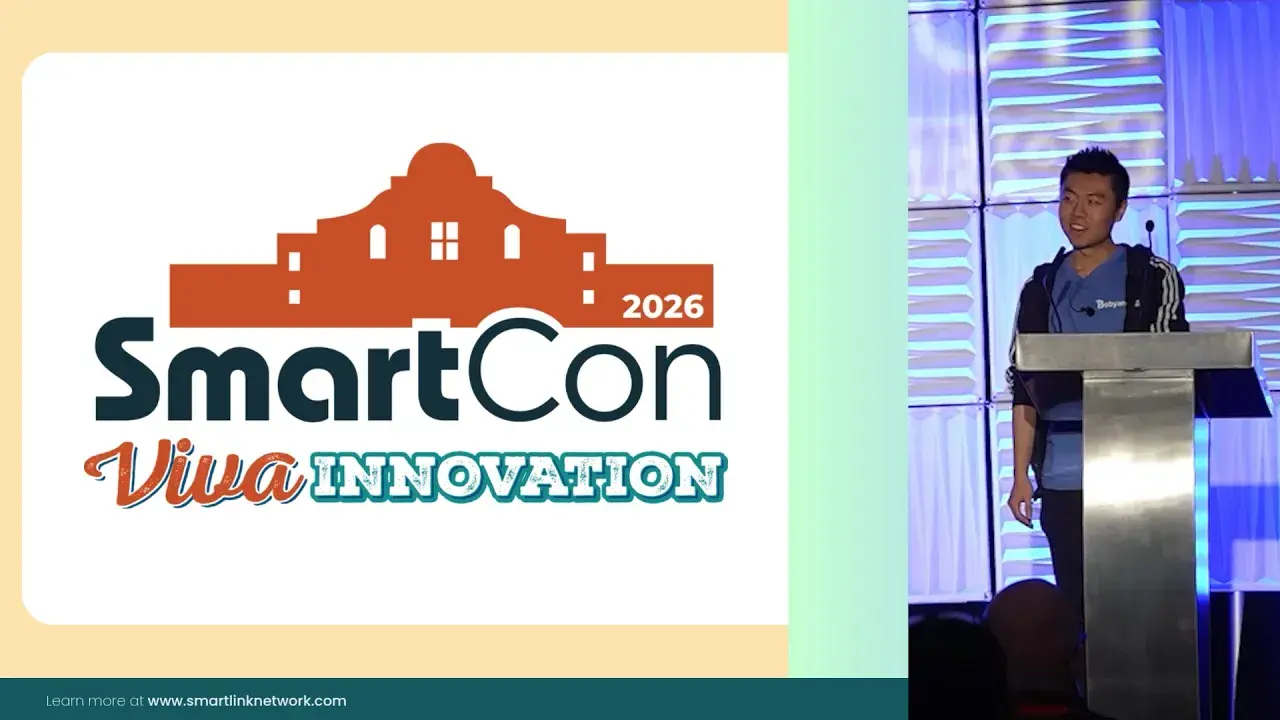
That’s why our founder, Michael Ding, offered a grounded explanation at Weathermatic’s SmartCon 2026 conference about what AI is, how it works, and how landscape contractors can make it work for them.
Keep reading for our recap, or watch Michael’s full talk on YouTube 👇
Subscribe for more videos like these on YouTube.
Subscribe to our Instagram and TikTok for quick highlights.
Takeaway 1: AI isn’t new, but the breakthroughs it’s having are
Very broadly, artificial intelligence simply means anything that tries to mimic human intelligence on decision making. It’s a way for humans to try and automate our decision-making process with scripts.
Most people associate AI with ChatGPT and having only come out in the last couple of years, but Michael explained that its roots go back to the 1960s, with checkers and chess bots that would break if you changed one rule.
That’s when the real breakthrough came with machine learning. Machine learning is the idea that instead of programming a model with explicit rules, you train it on data and let it figure out the patterns on its own.
The famous early example was a model that could distinguish cats from dogs in photos. Not because anyone told it what a cat or dog looked like, but because it processed millions of labeled images and learned to recognize the difference.
The three factors that have upleveled it in the 2020s are: more data, better algorithms, and faster hardware. The chips powering AI models roughly double in speed every couple of years. A technique that was too slow or too expensive five years ago can now run in real time. Because of this constant improvement and change, it can be hard to understand the impacts AI can have, but as Michael put it:
"It can't be both a bubble and going to take over all your jobs. It can only be one or the other. So in reality, it's probably somewhere in between." — Michael Ding, Founder @ Bobyard
Takeaway 2: AI excels at narrowly-defined and repetitive tasks
Understanding strengths and weaknesses of AI can help you cut through the hype and fear.
AI performs best on tasks that are narrow, repetitive, and well-defined. The more specific the scope, the more reliable the output. What it’s less equipped to handle well is open-ended, judgment-heavy work the way a human can. Michael described this as the difference between "middle to middle" work, which AI handles well, and "end to end" work, which people tackle best.
For landscape estimators, this distinction matters. Counting plants, measuring square footage, tracing irrigation lines—this is the kind of work AI can take over.
The strategic, personal relationship work entailed by getting to know a client, pricing a bid competitively, and deciding which jobs to chase is work best suited for a team. AI doesn’t eliminate people from the process, it can help make their work more strategic or less time-consuming.
"The best possible business you can make is when every person in your company is only doing things that that person can do. No one's doing low-leverage things — everybody's maximizing their leverage." — Michael Ding, Founder @ Bobyard
Takeaway 3: Industry-specific AI tools matter for contractors
With so many new AI tools, and existing tools adding AI into their offering, it can be confusing to decide what to buy or look for. Here, Michael offered practical tips.
General-purpose tools like ChatGPT are trained on broad, general data. If you ask it to read a landscaping plan and pull a plant schedule, it's going to struggle. It wasn't built for this.
A model trained specifically on thousands of landscape construction drawings is an entirely different tool. It understands the conventions, the symbols, the inconsistencies. Because the model is trained explicitly on this data, that also makes it more effective. It’s not a marketing claim, it's just how machine learning works.
"If a vendor is saying 'we only do landscaping, we only do irrigation,' their model is going to perform better than someone who says 'we do all of construction.' The more narrow the scope, the better the model. It's just naturally how models work." — Michael Ding, Founder @ Bobyard.
This is worth keeping in mind as more software vendors start adding "AI features" to their platforms. A general-purpose AI layer bolted onto existing estimating software is not the same thing as a model trained from the ground up on construction drawings. Accuracy in estimating is everything, so this is where the training model precision matters.
Takeaway 4: How to evaluate AI for your business
Though landscape companies can operate as small LLCs to large enterprises, Michael’s AI evaluation advice is the same: get analytical.
Before adopting an AI takeoff tool, it’s worth understanding:
- How long does a typical takeoff take your team today?
- How many bids could you run if you halved the time it took?
- If your close rate held, what would that mean for your revenue?
These numbers can help you understand what the tool could actually be worth for your business and give you a baseline to measure against to determine true ROI.
Michael’s tractor analogy captures the mindset shift required: when tractors were first invented, they only worked on flat farmland. Early adopters had to invest in leveling their fields before they could use them. The investment felt steep. But the contractors who made it eventually out-competed everyone still using oxen.
Takeaway 5: Practical tips to reduce AI hallucinations
During the Q&A, Michael gave a three-step foolproof way to stop “AI hallucinations,” the incorrect or strange responses a model gives you confidently as though it were true.
- Tell the model who it is (e.g., “you’re an expert in landscape construction estimating”). The model filters its analysis and response through that expert lens.
- Run multiple models. Many models, like ChatGPT and Gemini offer free or inexpensive tiers. Ask the same question in both, then compare answers. More robust models are usually doing this, but you can make use of free tools, too.
- Give the model a source. If you know the answer is somewhere across the web or a reference material, share that, then ask the model to draw from it. This grounds the response in real data rather than general training.
How landscape contractors can make the most of AI
AI brings hype and uncertainty. But for now, it’s not replacing every human, nor is it going away anytime soon. That’s why it’s important to see it for what it is: a set of tools that are capable of tackling the lower-leverage work that slows down your estimating team. Contractors who figure out how to deploy it well, and use tools and models specifically designed for this purpose are better positioned to bid more work in less time, more accurately.
Best of all, the industry is finally getting the kind of focused innovation it deserves. Bobyard is proud to be one of the companies providing a meaningful offering for landscape contractors like you. See what an AI-powered takeoff and estimation could look like for you by booking a demo.